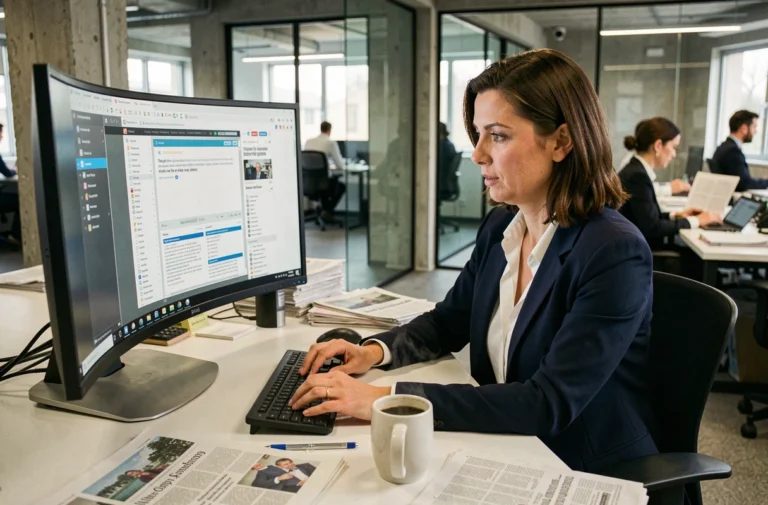
Navigating the maze of higher education can be complex without rigorous organization. Between classes, projects, and exams, you need to centralize your resources to gain efficiency. Gathering your notes, documents, and work tools not only saves time but also reduces the stress associated with searching for scattered information.
Using management apps, collaborative platforms, and online storage systems offers a modern solution to optimize your time and efforts. By centralizing resources, each student can focus more on learning and less on logistics.
The benefits of centralizing resources for higher education
Centralizing resources for higher education offers numerous advantages. First, this approach enhances concentration and makes the work environment more pleasant. By gathering all necessary information in one place, each student can quickly access their notes, documents, and work tools.
This organization reduces stress and allows for more structured tracking of work progress. By using platforms like MonUCP, students can easily find all their resources online. This greatly facilitates task and project management.
Organization is not an innate quality. It can be developed over time with the use of specific techniques. For example, creating templates for recurring tasks or responding to emails in order of priority are practices that enhance efficiency. Brainstorming sessions and developing strategies for problem-solving are also facilitated by good organization.
Optimal organization allows for Deep Work, a deep work method that maximizes productivity. This skill is a valuable soft skill in both academic and professional settings. It reduces the risk of burnout by allowing for better management of workflows and maintaining a healthy balance between different tasks.
How to effectively centralize resources for better organization
To effectively centralize resources, one must adopt suitable techniques and tools. Here are some proven strategies:
- Use task management platforms like Google Keep, Evernote, or Kanban boards to track projects. These tools allow you to capture ideas and notes across various devices: phone, tablet, computer.
- Practice Time blocking and Timeboxing to structure your days. These techniques help you allocate specific time slots for each task, optimizing your schedule.
- Apply the Pomodoro technique to improve your concentration. This method involves working in intervals of 25 minutes, followed by short breaks.
- Adopt the GTD (Getting Things Done) method for rigorous task tracking. This method allows you to clear your mind by externalizing all your obligations into a reliable system.
- Use the Eisenhower matrix to prioritize your tasks based on their urgency and importance. This technique helps you distinguish what is essential from what can wait.
- Maintain an empty inbox with the Inbox Zero approach. Organize your emails by sorting them as soon as they arrive, reducing digital chaos.
For optimal physical organization, draw inspiration from Marie Kondo’s KonMari Method™. This decluttering method focuses on keeping items that bring you joy, thereby simplifying your workspace.
These tools and techniques, when applied correctly, allow for better task management and create a more structured and pleasant work environment. Implementing these practices requires discipline, but their effectiveness is proven for optimal organization.