An outdoor wedding in the middle of July, soft grass underfoot, the sun low in the sky at the end of the day: the setting seems to allow for just about anything. However, men’s outfit mistakes lurk within this false sense of freedom. The outdoor setting imposes technical constraints that many men discover on the big day, between soles sinking into the grass and shirts soaked before dessert.
Leather soles on grass: the trap no one anticipates
We often talk about cut, color, and style. Rarely about what happens under the shoe. On damp grass or a gravel path, rigid leather soles sink or slip. The thin heel of a classic oxford literally sinks into the soft ground after just a few steps.
Stable-soled derbies or suede loafers offer a much better compromise. The slightly treaded or rubber sole maintains grip without compromising style. It is recommended to test shoes in real conditions before the wedding: walking on grass, gravel, and climbing a slope. This helps identify friction points, stability issues, and adjust the pant length accordingly.
An guest tripping on a sloped surface or removing their shoes during the cocktail hour is something we see at every outdoor wedding. Choosing the right pair addresses the issue beforehand. Pairing the outfit with a well-chosen tie and shoes suitable for the terrain forms the basis of a coherent look for the outdoors.
Black suit in full sun: color and outdoor light
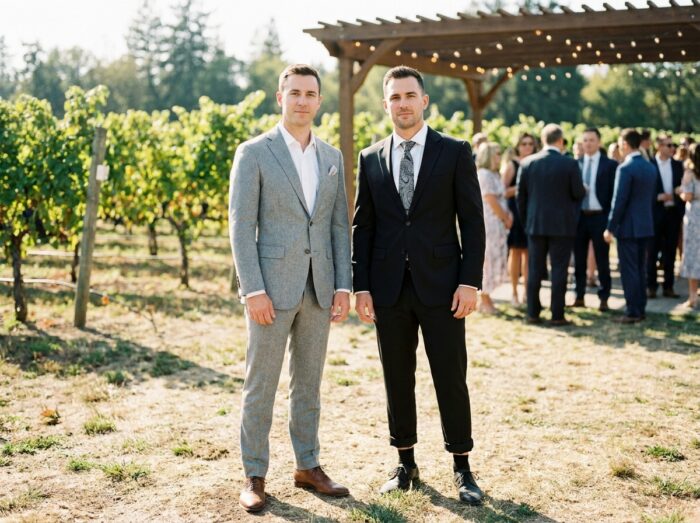
The reflex to wear a black suit to “look dressed up” works indoors. Outdoors, under direct sunlight, it has the opposite effect. Very dark tones absorb heat and appear heavier in photos taken during the day.
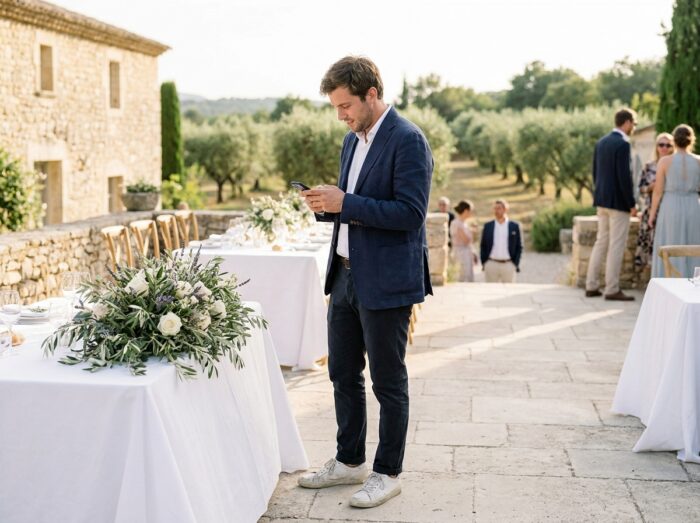
Light gray, stone, sky blue, or sage green tones are more suited to natural light. They better reflect ambient brightness and provide a fresher photographic result. Sand beige or powder blue work particularly well in a rural or garden setting.
We often see guests in tight anthracite suits in the middle of a sunny meadow, completely out of sync with the atmosphere. The dress code “business attire” does not mechanically apply to an outdoor wedding. If the couple hasn’t specified a strict color code, opting for light or medium shades remains the safest choice.
Heavy fabrics and thick linings: the programmed overheating
A cold wool suit fully lined is suitable for a ceremony in an air-conditioned room. Outside, as soon as the temperature rises, it becomes a sauna. The issue is not just comfort: visible sweat on a structured jacket gives an unflattering result in photos.
An unlined or loosely structured jacket manages temperature fluctuations better than a traditional suit. Soft constructions in breathable fabrics allow air to circulate while remaining presentable when the reception extends into the evening.
Among the suitable materials for an outdoor wedding:
- Linen, which breathes naturally but wrinkles quickly (to be accepted as part of the style, not as a flaw).
- Hopsack, an open weave that allows air to pass while maintaining a proper shape.
- Seersucker, recognizable by its puckered texture, particularly suitable for high heat.
- Linen-wool or cotton-linen blends, which combine breathability with minimal structure.
Feedback varies on the appearance of linen at the end of the day, but a slight wrinkle is part of the charm of a summer outfit. Better a slightly marked linen suit than a polyester suit that clings to the skin.
Accessories and adjustments for an outdoor wedding
Many men focus on the suit and neglect accessories, or do the opposite by overloading the outfit. Both mistakes produce the same result: a look that doesn’t last through the day.
Watch, pocket square, and cufflinks
A maximum of three accessories is enough to structure a wedding look. A simple watch, a pocket square that picks up a color from the outfit, and, optionally, discreet cufflinks. Beyond that, it tips into excess.
The pocket square should not match the tie exactly. This is a common reflex that gives a “ready-to-wear kit” effect rather than a personal choice. Picking a complementary shade works better.
Pant length and hem
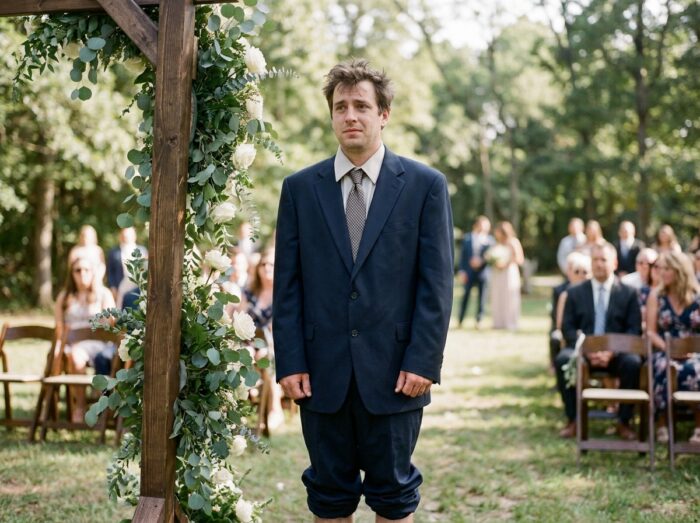
Outdoors, pants that are too long drag in the damp grass and get dirty quickly. A hem that falls just above the shoe avoids stains and gives a sharper silhouette. If the pants have been adjusted for heeled dress shoes, check that they also work with the pair intended for the wedding.
Planning for the day-night transition
An outdoor wedding often starts in the sun and ends in the evening, sometimes with a notable drop in temperature. Planning for an additional piece is not excessive:
- A lightweight knit vest that slips under the jacket without adding bulk to the silhouette.
- A light linen or cotton scarf for the shoulders at the end of the evening.
- A second pocket square, simply, for unforeseen issues related to sweat or dew.
The right sole, the right material, the right pant length: these concrete adjustments separate a comfortable guest from the ceremony to the last slow dance from one who is counting the hours until they can take off their jacket.