The choice of garden equipment is not just about browsing a catalog and checking boxes. The configuration of the land, the type of soil, the exposure, and especially the mode of use (individual or collective) dictate technical decisions that most guides overlook.
Multifunctional equipment or dedicated tools: the technical profitability threshold
For gardens smaller than 200 m², multifunctional equipment outperforms dedicated tools in efficiency, according to tests published by the magazine Jardinage Pratique in February 2026. A combined mower/hedge trimmer reduces storage space and limits handling, two critical parameters when the storage space consists of a terrace trunk or a shared technical room.
Beyond this surface threshold, dedicated tools regain the advantage. A thermal mower or a mowing robot covers larger lawns better than a hybrid device whose motor is sized for short sessions. We recommend considering two criteria before any purchase: the actual area to maintain and the weekly usage frequency.
To explore garden equipment on Expert Jardin, this area/frequency intersection remains the best selection filter before comparing ranges.
Autonomous solar irrigation: a solution suited for dry gardens
Autonomous solar-powered irrigation stations are gaining ground, particularly in Mediterranean regions. The FNAMS study from April 2026 on irrigation practices in amateur gardening confirms a strong preference for these devices, which reduce water consumption without complex installation.
A solar panel coupled with a buffer tank is sufficient to supply a drip irrigation network over a flowerbed area or a vegetable garden. The sizing depends on the daily flow required and the average sunlight of the site. In southern areas, the yield is nearly constant from May to September.
Two points to check before equipping:
- The capacity of the buffer battery, which must cover at least two days of autonomy in case of prolonged cloud cover.
- The compatibility of the system with a timer, to avoid watering during hot hours and limit evaporation.
- The type of drippers (self-regulating or not), which affects the uniformity of distribution on sloped terrain.
Garden equipment in urban co-ownership: collective constraints and technical choices
Shared gardens in co-ownership pose problems that guides aimed at individual houses ignore. The co-ownership regulations often impose restrictions on noise, usage hours, and the storage of equipment in common areas.
An electric tool, whether corded or battery-operated, systematically replaces thermal equipment in this context. The noise pollution from a thermal mower exceeds the thresholds tolerated by most internal regulations, and storing fuel in a common area poses a safety issue.
The European directive 2025/2784, published in December 2025, strengthens compliance requirements for motorized equipment intended for use in shared spaces. We observe that this regulation encourages co-ownerships to pool certified equipment rather than allowing each resident to bring their own.
Pooling equipment: selection criteria
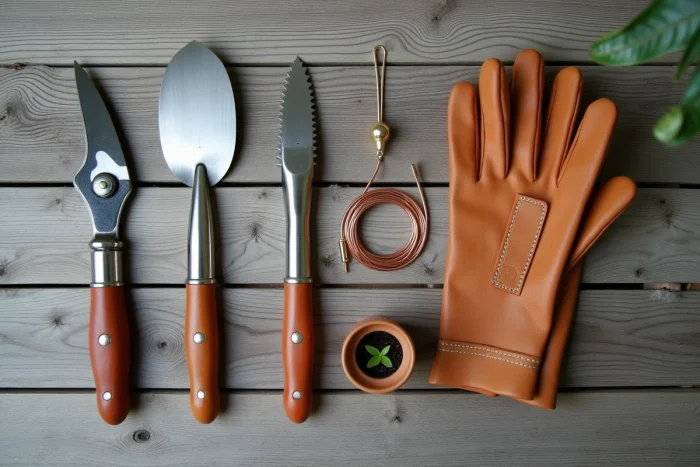
Pooling does not mean buying at a discount. The robustness of the chassis and the availability of spare parts take precedence over the purchase price when equipment is used by multiple users each week.
- Favor brands whose after-sales service network covers the urban area in question, to avoid repair delays that immobilize the tool at the peak of the season.
- Opt for interchangeable batteries between several tools of the same range (hedge trimmer, blower, mower), which reduces overall costs and simplifies fleet management.
- Plan a rotation schedule and a locked storage room with a shared inventory, to avoid premature degradation due to chaotic storage.
Outdoor furniture and lighting: balancing durability and aesthetics
Garden furniture made of woven resin or aluminum withstands the elements better than untreated wood, but wood (acacia, teak) ages with a finish that resin cannot replicate. The choice depends on the time you are willing to devote to maintenance.
An aluminum garden set requires only seasonal cleaning, whereas a wooden set requires a cleaner and protective oil at least once a year. In co-ownership, this difference in maintenance directly influences the shared budget.
For outdoor lighting, low-voltage solar bollards meet ambiance needs on a terrace or along a path. Recessed 12 V spots remain preferable for traffic areas where safety requires a constant light flow, independent of solar charge.
Umbrella and sun protection: an often underestimated aspect
A cantilever umbrella with a weighted base of several dozen kilos holds up better in the wind than a straight umbrella planted in a lightweight base. On a co-ownership terrace, where the wind accelerates between buildings, the weighting and fastening system determine safety as much as comfort.
The coated polyester fabric offers adequate UV protection for regular use. For prolonged exposure, a mass-dyed acrylic fabric retains its properties longer without fading.
The choice of garden equipment relies on technical decisions related to the land, regulations, and mode of use. In urban co-ownership, well-organized pooling allows access to more robust ranges without exploding the individual budget, provided that rotation and storage are structured from the outset.